Are Compatible Optical Transceivers Reliable? Testing and Quality Explained
author: Jane
2026-05-08

Many buyers have the same concern before purchasing:
Are compatible optical transceivers reliable?
Are compatible optical transceivers reliable?
Lower prices often create doubt. Some users have experienced modules that fail after a short period, cause link instability, or are not recognized by their switches.
But in reality, the issue is not compatibility itself.The real difference lies in quality control and testing.
A well-tested compatible optical transceiver can perform just as reliably as an original brand module. The key is whether every unit is fully tested before shipment.
Here is how we ensure consistent quality and performance.
Test 1: End-Face Cleaning and Inspection
Dirty fiber end-faces are one of the most common causes of link failure. Dust or oil contamination can block optical signals or even damage internal components.
Every module we ship goes through:
- Microscopic inspection of the optical interface
- Professional dry cleaning of the end-face
- Final inspection to confirm cleanliness
No module is sealed until the end-face is fully verified.
Test 2: Functional Test
Each optical transceiver is tested for essential electrical and optical performance.
We verify:
- Power-up and module recognition
- Digital Diagnostic Monitoring (DDM) data
- Alarm and warning thresholds
- Coding accuracy for compatibility
Any module that does not meet specifications is rejected.
Test 3: Compatibility Test
A compatible transceiver must function exactly like an original module in real-world environments.
We test modules in actual switches from major brands to confirm:
- Stable link establishment
- Error-free data transmission
- Accurate DDM readings under traffic
- Reliable hot-swapping
This is where many low-cost suppliers fall short — they do not perform real compatibility testing.
Why Some Compatible Modules Fail
Not all compatible transceivers are the same. Failures are usually caused by:
- Lack of full testing (only random sampling)
- Poor connector cleanliness
- Incorrect coding
- No real switch compatibility verification
Testing requires time and cost. Reliable suppliers invest in it — low-cost suppliers often skip it.
100% Full Inspection — No Sampling
Every single module we ship is fully tested. No exceptions.
Each unit has a complete and traceable testing record.
This ensures consistent performance and long-term reliability.
This ensures consistent performance and long-term reliability.
Testing Workflow
Every module follows a strict process:
Receive module → End-face cleaning & inspection → Functional test → Compatibility test → Final re-test → Cleaning → Packaging
No steps are skipped.
Test Before You Buy
Still unsure about compatible optical transceivers?
We believe reliability should be proven, not promised.
You can:
- Request samples for testing in your own network
- Ask for detailed test reports
- Compare our modules with your current supplier
Contact us with your required models.
We provide fully tested, verified optical transceivers you can trust.
We provide fully tested, verified optical transceivers you can trust.
What Is a Media Converter and How Does It Work?
Optical Transceiver Buying Guide: How to Choose the Right Module for Your Network
Related Article
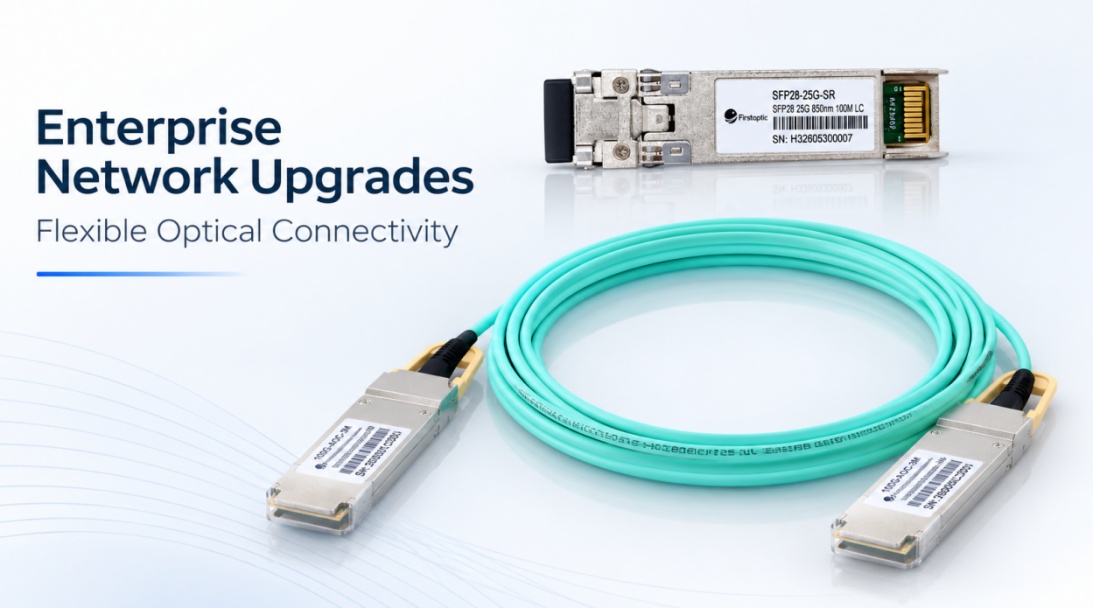
HCH provides flexible optical connectivity solutions to support enterprise network upgrades, including SFP, SFP28, QSFP28, AOC, and DAC solutions for different network requirements.
HCH Supports Enterprise Network Upgrades with Flexible Optical Connectivity Solutions
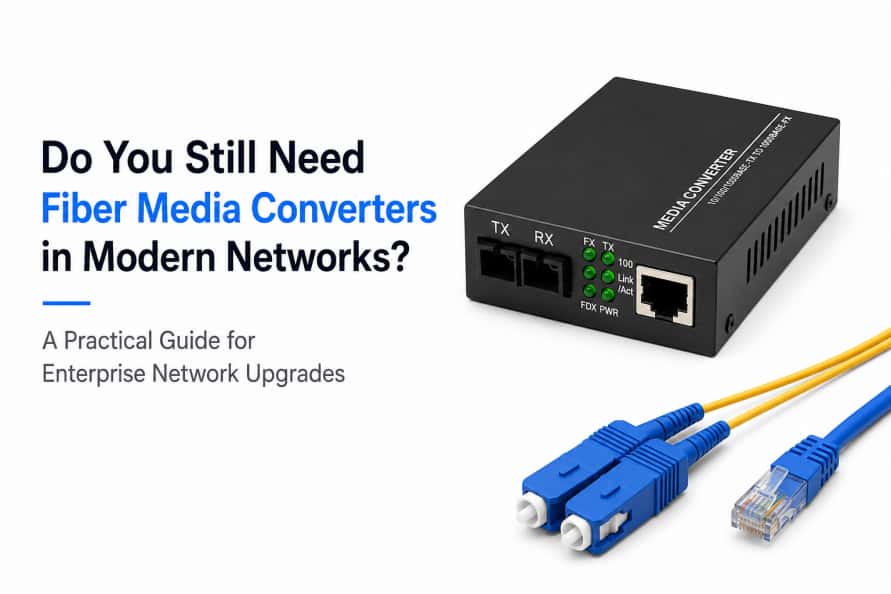
Learn why fiber media converters are still widely used in modern networks, when they are the right choice, and how they compare with fiber switches.
Do You Still Need Fiber Media Converters in Modern Networks?