Do You Still Need Fiber Media Converters in Modern Networks?
author: Jane
2026-07-27
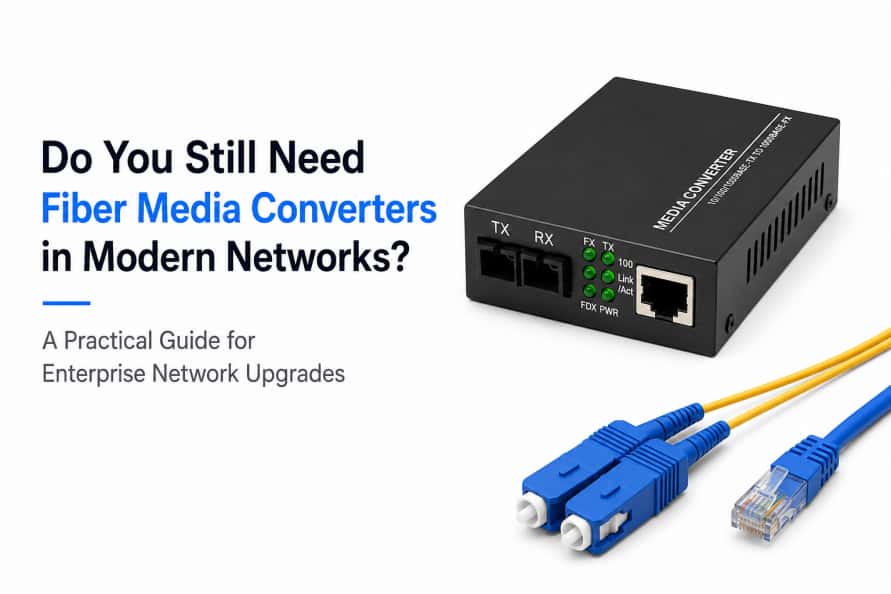
With more Ethernet switches now offering built-in SFP ports, many people assume that fiber media converters have become obsolete. If a switch already supports fiber, why add another device to the network?
In reality, fiber media converters continue to play an important role in many enterprise and industrial deployments. While they are no longer the default choice for every project, they remain one of the simplest and most cost-effective ways to extend Ethernet over fiber without replacing existing equipment.
The real question is no longer whether media converters are outdated, but when they are still the right solution.
Why Haven't Fiber Media Converters Disappeared?
Modern networks rarely start from scratch. Most organizations already have switches, cameras, access points, controllers, and industrial devices operating over copper Ethernet.
Replacing all of this equipment simply to introduce fiber is often unnecessary and expensive.
A fiber media converter allows existing RJ45 devices to communicate over optical fiber while keeping the original network equipment in service. For many network upgrades, replacing the transmission medium—not the devices themselves—is the more practical approach.
Where Do Fiber Media Converters Still Make Sense?
Although fiber switches are increasingly common, media converters remain the preferred choice in several real-world scenarios.
IP Surveillance
Security cameras are often installed hundreds of meters away from the control room. Fiber media converters make it possible to extend network distance while continuing to use standard Ethernet cameras.
Industrial Networks
Factories, warehouses, and manufacturing sites are frequently exposed to electromagnetic interference. Fiber provides more stable transmission while media converters allow existing industrial Ethernet devices to remain in operation.
Building-to-Building Connections
When connecting separate office buildings, warehouses, or production facilities, fiber media converters offer a simple way to bridge long-distance fiber links without replacing existing network infrastructure.
Small Network Expansions
For projects requiring only one or two fiber connections, deploying a dedicated media converter is usually more economical than replacing an entire switch.

When Is a Fiber Switch the Better Choice?
Media converters are not the ideal solution for every deployment.
If a new network requires multiple fiber uplinks, centralized management, VLAN configuration, QoS, or future expansion, a managed fiber switch is generally the better investment.
Rather than deploying several standalone media converters, integrating fiber ports directly into the switching infrastructure simplifies network management and improves scalability.
Fiber Media Converter vs Fiber Switch
|
Fiber Media Converter
|
Fiber Switch
|
|---|---|
|
Connects individual copper devices to fiber
|
Supports multiple fiber connections
|
|
Ideal for upgrading existing networks
|
Better for new network deployments
|
|
Plug-and-play installation
|
Advanced management features
|
|
Lower initial investment
|
Greater scalability and flexibility
|
The choice depends less on which product is "better" and more on how the network is being built.
HCH Fiber Media Converter Solutions
HCH offers a range of fiber media converters designed for enterprise, surveillance, industrial, and campus networks. Supporting Gigabit Ethernet, single-mode and multimode fiber, and multiple transmission distances, HCH solutions help customers extend network reach while making full use of existing Ethernet infrastructure.
Conclusion
Fiber media converters have not disappeared—they have simply become more application-specific.
When upgrading an existing Ethernet network, extending transmission distance, or connecting remote devices over fiber, a media converter remains a practical and cost-effective solution.
For larger deployments requiring centralized management and long-term scalability, a fiber switch is often the better choice.
Selecting the right solution starts with understanding your network architecture rather than following the latest trend.
HCH Supports Enterprise Network Upgrades with Flexible Optical Connectivity Solutions
HCH Supports Enterprise Network Upgrades with BiDi Optical Solutions
Related Article
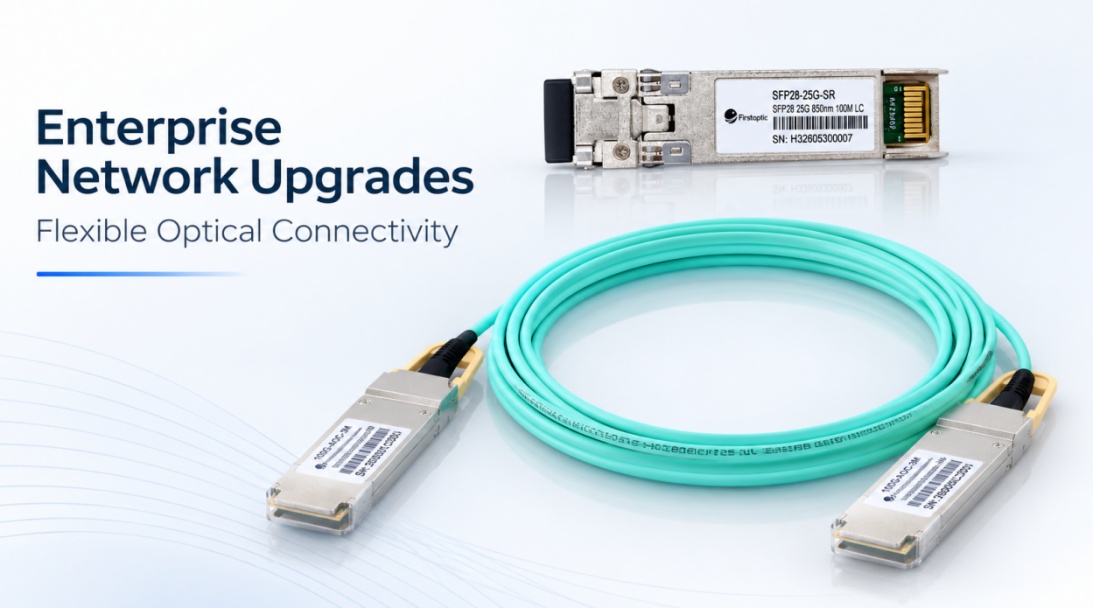
HCH provides flexible optical connectivity solutions to support enterprise network upgrades, including SFP, SFP28, QSFP28, AOC, and DAC solutions for different network requirements.
HCH Supports Enterprise Network Upgrades with Flexible Optical Connectivity Solutions

HCH supports enterprise network upgrades with BiDi optical solutions that help organizations maximize existing fiber infrastructure and simplify optical connectivity across campus and enterprise networks.
HCH Supports Enterprise Network Upgrades with BiDi Optical Solutions