
Category


Commercial-grade 2x10/100/1000Base-T RJ45 to 4x1000Base-X Single-fiber Single-mode 20km GE SC Optical Fiber Transceiver
Product Highlights
* Supports MDI/MDI-X adaptation, full/half-duplex adaptation
* Dynamic LED indicator, showing the current working status of the device in real time
* Simple to use, plug-and-play, no need for any settings
* Operating temperature range: -20℃ to 70℃
* Compatible with international communication standards such as IEEE802.3 and IEEE802.3u
* Sleek iron-shell design, supporting rack-mounted installation
Commercial-grade 1000Mbps 4 Optical 2 Electrical Media Converter(2x10/100/1000Base-T RJ45 to 4x1000Base-X, Single-mode, Single-fiber, 20KM, SC, Desktop / Wall-mounted)
Specifications
Product Name | 1000Mbps fiber optic transceiver | Model number | HT-1000M-4F2E |
Optical port description | 4*1000Base-FX | Electrical port description | 2*10/100/1000Base-TX |
Optical fiber port | SC | Transmission distance | 20KM |
Fiber type | Single-fiber single-mode | Power supply voltage | DC-5V |
Operating temperature | -20℃ to 70℃ | Power supply | External power adapter |
Network protocol | IEEE802.3;802.3i;802.3U;802.3ab; 802.32;802.3x;802.3af;802.3at | Installation method | Desktop / Wall-mounted installation |
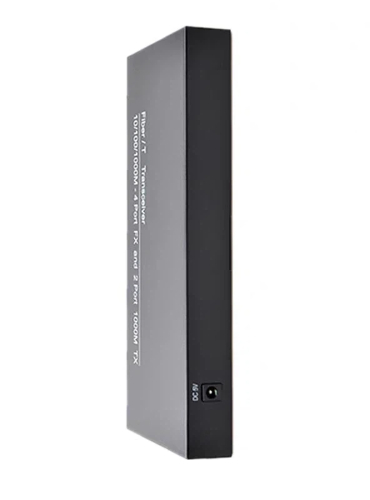
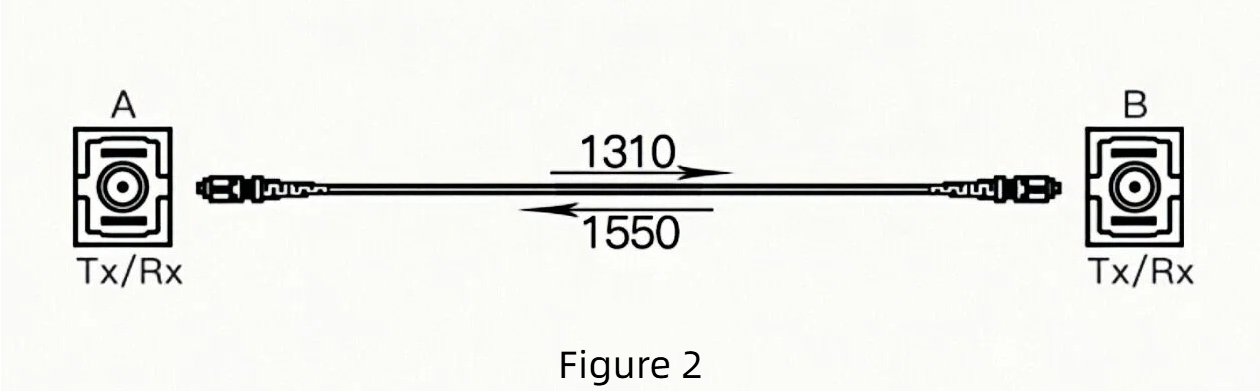
② Single-fiber Long Distance: This technology uses a single fiber for both directions, saving resources. They support transmission over a range of 20 to 120 kilometers and are suitable for long-distance scenarios such as campus interconnection.
2. Flexible Adaptation and Networking
① Multi-port compatibility: Standard SC optical ports + RJ45 electrical ports. Easy debugging.
② Wide wavelength compatibility: gigabit 4 fiber 2 copper transceiver supports 1310nm/1550nm, and partially supports WDM, enhancing the utilization rate of optical fibers.
③ Multiple working modes: gigabit 4 fiber 2 copper transceiver supports VLAN and other modes. High-end models also support link aggregation to meet redundancy requirements.
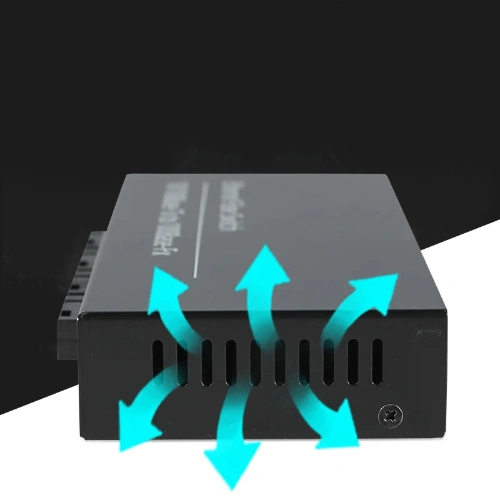
① Wide environmental compatibility: gigabit 4 fiber 2 copper transceiver supports wide voltage input, operating temperature range of -20℃ to 70℃ (even wider for industrial grade), adaptable to various environments.
② Link redundancy: Supports link monitoring, fault alarm switching, and partial support for fault status synchronization.
4. Convenient Management and Maintenance
① Visual monitoring: LED indicator lights for troubleshooting. High-end models support remote Web/SNMP management.
② Easy installation and maintenance: gigabit 4 fiber 2 copper transceiver supports rack or desktop installation, with simple configuration and low maintenance costs.
5. Safety and Compliance
① Data security: gigabit 4 fiber 2 copper transceiver supports VLAN isolation, partial support for port isolation and MAC binding, and prevents unauthorized access.
② Compliance Certification: Obtained CE/FCC/RoHS certifications, and rigorously tested to ensure safety and stability.
Summary: The advantages of the gigabit 4 fiber 2 copper transceivers include long-distance transmission, stability and reliability, flexibility in adaptation, and ease of operation and maintenance. They are the key equipment for commercial network interconnection.
The gigabit 4 fiber 2 copper transceivers are specially designed for enterprise-level scenarios. They primarily realize the bidirectional conversion of 1000Mbps Ethernet signals and single-mode optical signals through a single-fiber technology. By reducing the cost of optical fibers, they ensure stable performance to meet the requirements of commercial network rates, distances, and security. Gigabit 4 fiber 2 copper transceivers widely applied in campus networking, operator access, monitoring transmission and other architectures.
In terms of core performance, the gigabit 4 fiber 2 copper transceivers use high-quality and stable chips, supporting 1000Mbps full-duplex/half-duplex adaptive modes. They can carry various types of commercial data at 1000Mbps without delay, avoiding packet loss and stuttering.
Compared to traditional network cable transmissions, the gigabit 4 fiber 2 copper transceivers, relying on the low loss and anti-interference characteristics of optical fibers, can easily break through the transmission distance limitations of electrical signals, extending the data transmission distance from the meter-level to several kilometers or even hundreds of kilometers. Whether it is the expansion of enterprise local area networks, the interconnection of campus networks, or the construction of security monitoring and access networks by telecommunications operators, gigabit 4 fiber 2 copper transceivers can be seen everywhere.
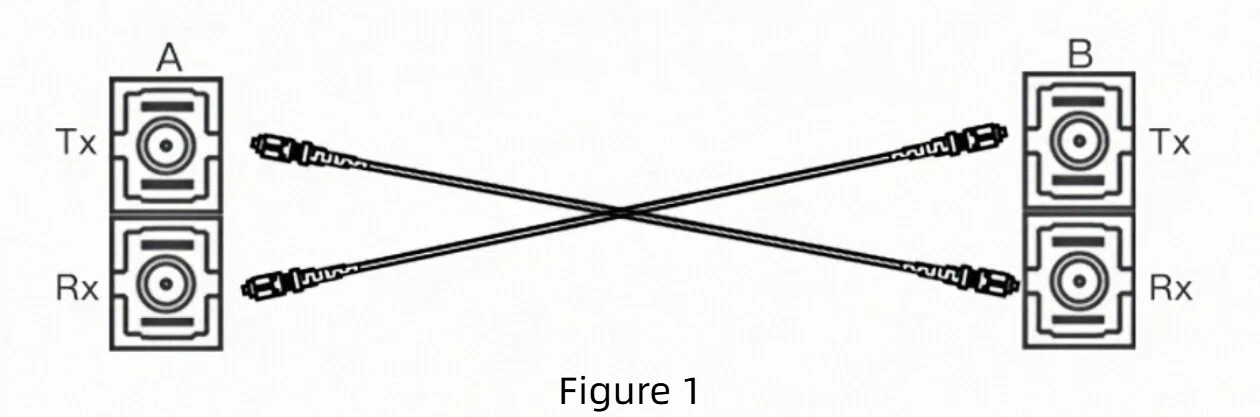
Connection method
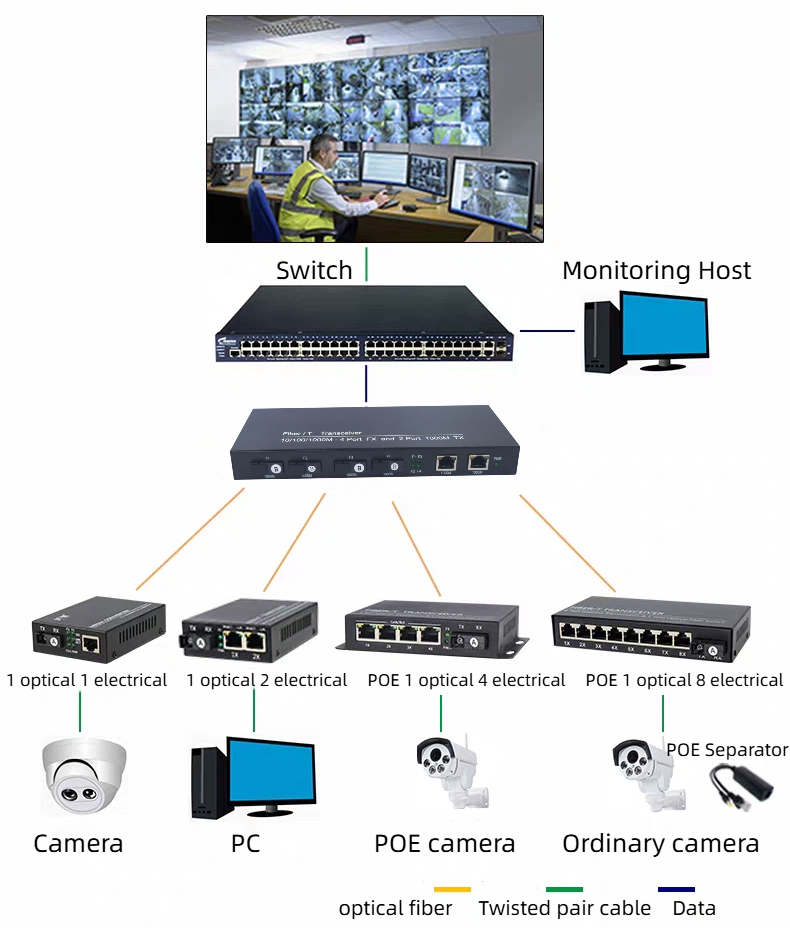
Product application
 Residential areas/schools
 Security monitoring
 Fiber optic home access
 Enterprise offices
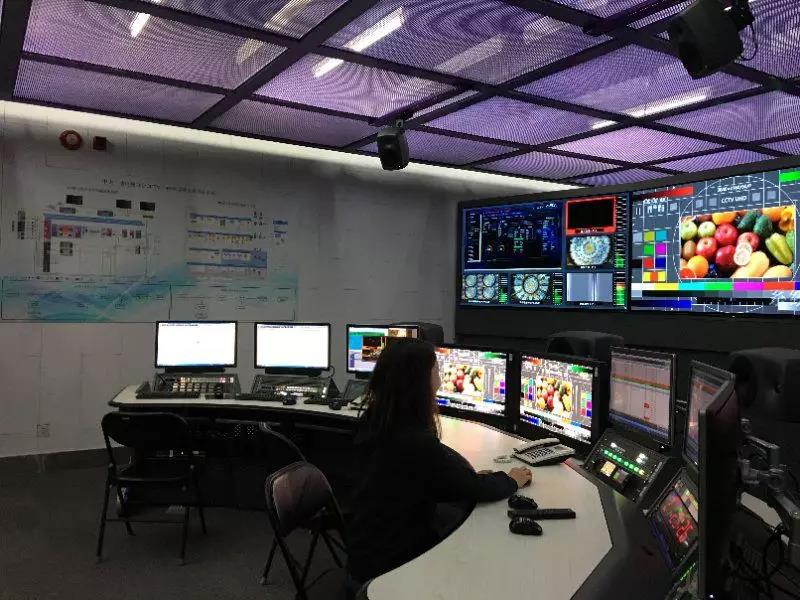 Television broadcasting
 Large local area networks
 Commercial-grade 1x10/100Base-T RJ45 to 1x100Base-X FE SFP Optical Fiber TransceiverOptical fiber transceivers, also known as optical-electrical converters, are industrial network communication devices that perform bidirectional conversion between electrical signals and optical signals. Their main function is to address the limitation of the limited transmission distance of twisted-pair Ethernet, enabling the interconnection between electrical port devices and fiber optic networks. Product Highlights * Supports MDI/MDI-X adaptation, full/half-duplex adaptation * Dynamic LED indicator, showing the current working status of the device in real time * Simple to use, plug-and-play, no need for any settings * Operating temperature range: -20℃ to 70℃ * Compatible with international communication standards such as IEEE802.3 and IEEE802.3u * Sleek iron-shell design, supporting rack-mounted installationHTB-C105Send Inquiry
 Commercial-grade 1x10/100Base-T RJ45 to 1x100Base-X Multimode 2km FE SC Optical Fiber TransceiverOptical fiber transceivers, also known as optical-electrical converters, are industrial network communication devices that perform bidirectional conversion between electrical signals and optical signals. Their main function is to address the limitation of the limited transmission distance of twisted-pair Ethernet, enabling the interconnection between electrical port devices and fiber optic networks. Product Highlights * Supports MDI/MDI-X adaptation, full/half-duplex adaptation * Dynamic LED indicator, showing the current working status of the device in real time * Simple to use, plug-and-play, no need for any settings * Operating temperature range: -20℃ to 70℃ * Compatible with international communication standards such as IEEE802.3 and IEEE802.3u * Sleek iron-shell design, supporting rack-mounted installationHTD-FE11-D02Send Inquiry
 Commercial-grade 1x10/100Base-T RJ45 to 1x100Base-X Single Mode 20km FE SC Optical Fiber TransceiverOptical fiber transceivers, also known as optical-electrical converters, are industrial network communication devices that perform bidirectional conversion between electrical signals and optical signals. Their main function is to address the limitation of the limited transmission distance of twisted-pair Ethernet, enabling the interconnection between electrical port devices and fiber optic networks. Product Highlights * Supports MDI/MDI-X adaptation, full/half-duplex adaptation * Dynamic LED indicator, showing the current working status of the device in real time * Simple to use, plug-and-play, no need for any settings * Operating temperature range: -20℃ to 70℃ * Compatible with international communication standards such as IEEE802.3 and IEEE802.3u * Sleek iron-shell design, supporting rack-mounted installationHTD-FE11-D20Send Inquiry
 Commercial-grade 1x10/100Base-T RJ45 to 1x100Base-X Single Mode 40km FE SC Optical Fiber TransceiverOptical fiber transceivers, also known as optical-electrical converters, are industrial network communication devices that perform bidirectional conversion between electrical signals and optical signals. Their main function is to address the limitation of the limited transmission distance of twisted-pair Ethernet, enabling the interconnection between electrical port devices and fiber optic networks. Product Highlights * Supports MDI/MDI-X adaptation, full/half-duplex adaptation * Dynamic LED indicator, showing the current working status of the device in real time * Simple to use, plug-and-play, no need for any settings * Operating temperature range: -20℃ to 70℃ * Compatible with international communication standards such as IEEE802.3 and IEEE802.3u * Sleek iron-shell design, supporting rack-mounted installationHTD-FE11-D40Send Inquiry
Send Message