
Category


Cisco Compatible 40GBASE-LR4 QSFP+ Optical Transceiver Module
Product Highlights
*40GBASE-LR4 transmission up to 10km
*Duplex LC single mode fiber connectivity
*1310nm CWDM optical technology
*IEEE 802.3ba and QSFP+ MSA compliant
*Digital Diagnostic Monitoring (DDM)
*Hot-pluggable QSFP+ form factor
*Ideal for data center interconnect
*Suitable for campus backbone networks
*Multi-vendor compatibility support
40GBASE-LR4 QSFP+ Optical Transceiver Module (40G, 1310nm, 10km, Duplex LC, DDM)
The 40GBASE-LR4 optical transceiver is widely used in modern data center and enterprise networks where reliable long-distance 40GbE connectivity is required.
Compared with short-reach multimode solutions, LR4 modules enable transmission over existing single mode fiber infrastructure, helping reduce network complexity while extending deployment flexibility.With support for data center interconnect, campus backbone connectivity, and enterprise aggregation networks, the module provides a cost-effective solution for building scalable and future-ready optical networks.
Product Details
Data Rate | Module Type | Distance | Wavelength | Interface | Temperature | DDM |
40Gb/s | QSFP+ | 10KM | 1310nm | LC | 0~70℃ | Yes |
Specifications
Part Number | QSFP-40G-LR4 | Brand | Firstoptic |
Form Factor | QSFP+ | Max. Data Rate | 44.6Gbps (4x 11.2Gbps) |
Wavelength | 1310nm | Max. Cable Distance | 10km |
Connector | Duplex LC | Media | SMF |
Transmitter Type | DFB CWDM | Receiver Type | PIN |
TX Power | -7~2.3dBm | Receiver Sensitivity | <-11dBm |
Power Budget | 4dB | Receiver Overload | 2.3dBm |
Power Consumption | ≤3.5W | Extinction Ratio | >3.5dB |
Core Size | 9um | Modulation | NRZ |
Commercial Temperature Range | 0 to 70°C (32 to 158°F) | Protocols | OTN OTU3, 40G Ethernet, Fiber Channel, SATA/SAS3, MSA Complian |
Certification system



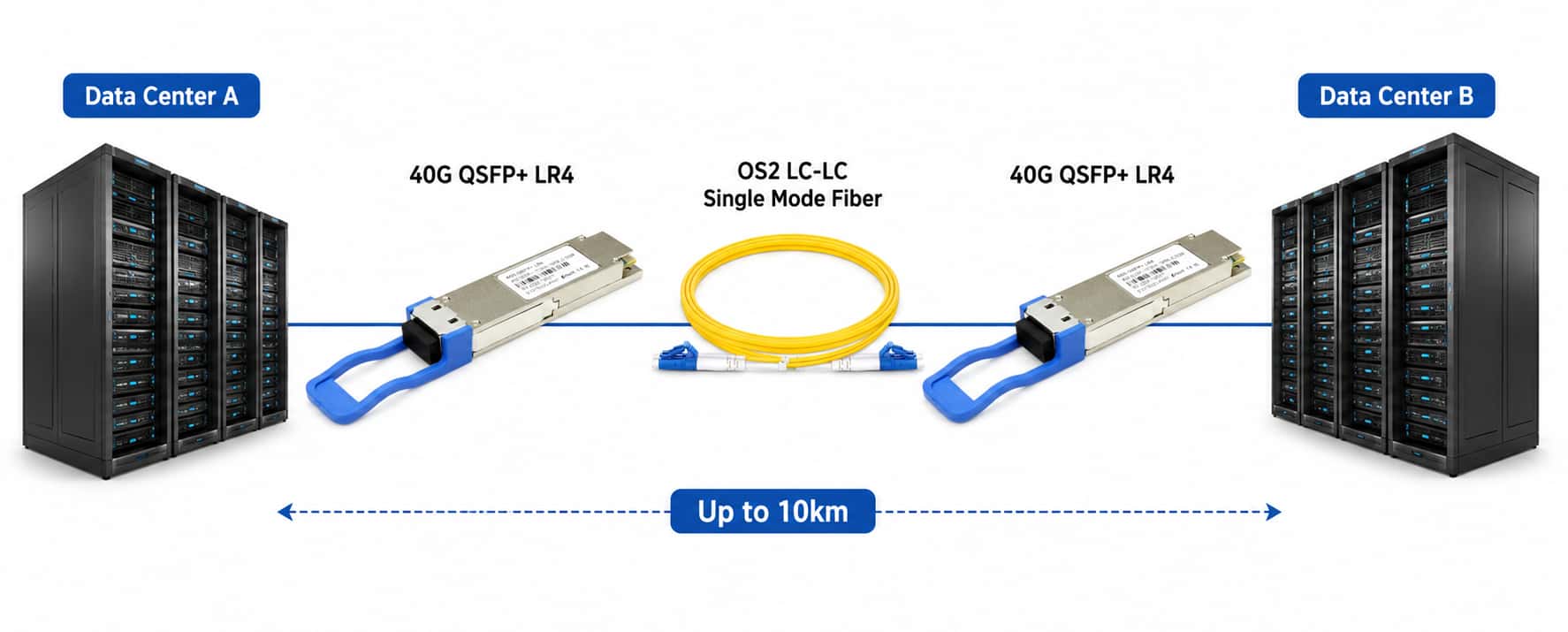
Data Center Interconnect
The 40GBASE-LR4 optical transceiver enables reliable 40GbE connectivity between data center facilities over distances up to 10km.
Typically deployed with OS2 LC-LC single mode fiber patch cords and 40G QSFP+ switch ports, it provides a scalable solution for data center interconnect (DCI), storage networking, and cloud infrastructure expansion.
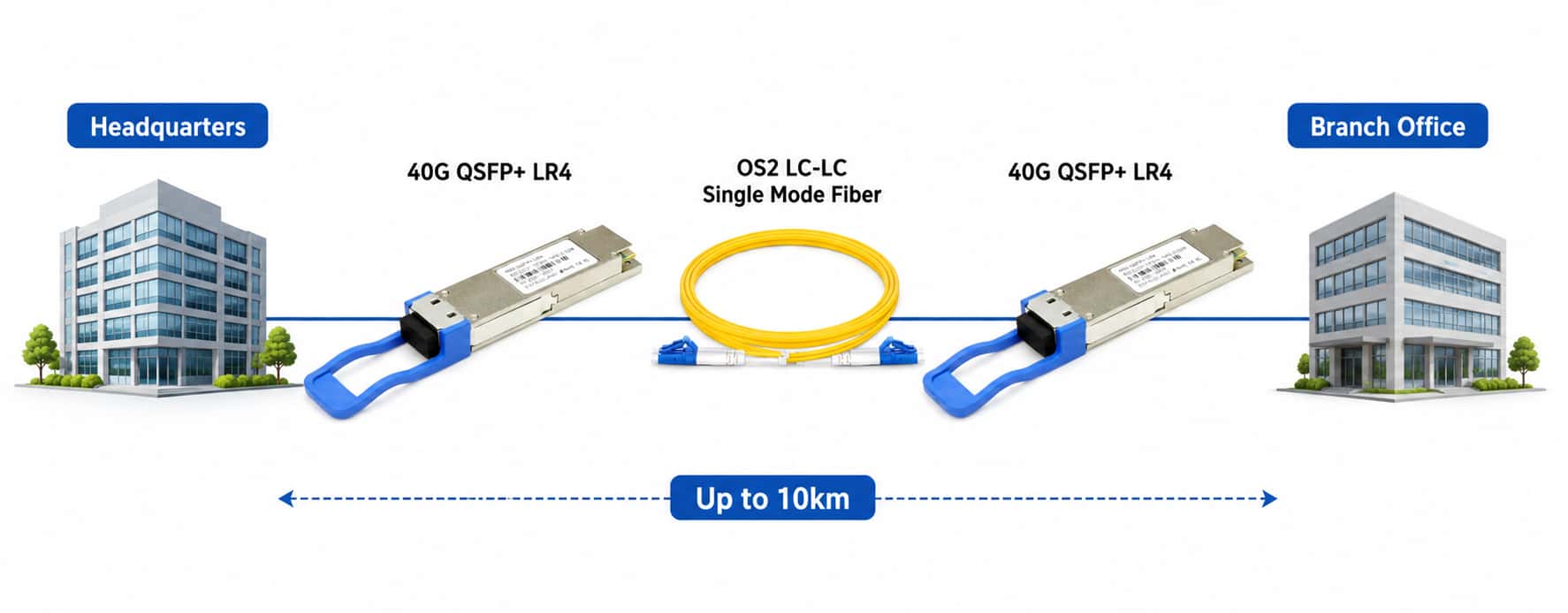
Enterprise Backbone Connectivity
The 40G QSFP+ LR4 transceiver enables reliable connectivity between enterprise headquarters, branch offices, and backbone network locations over existing single mode fiber infrastructure.
When deployed with OS2 LC-LC single mode fiber patch cords and 40G Ethernet switches, it provides a cost-effective solution for enterprise backbone connectivity and long-distance network expansion.
Features
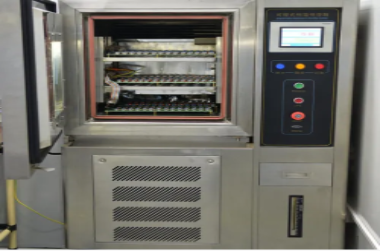
From optical signal testing and switch compatibility checks to temperature and aging tests, each 40gbase-lr4 module is inspected to ensure stable operation, long-term reliability, and consistent network performance.
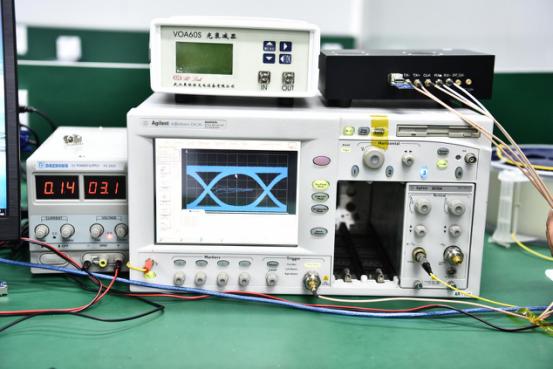 Test Equipment
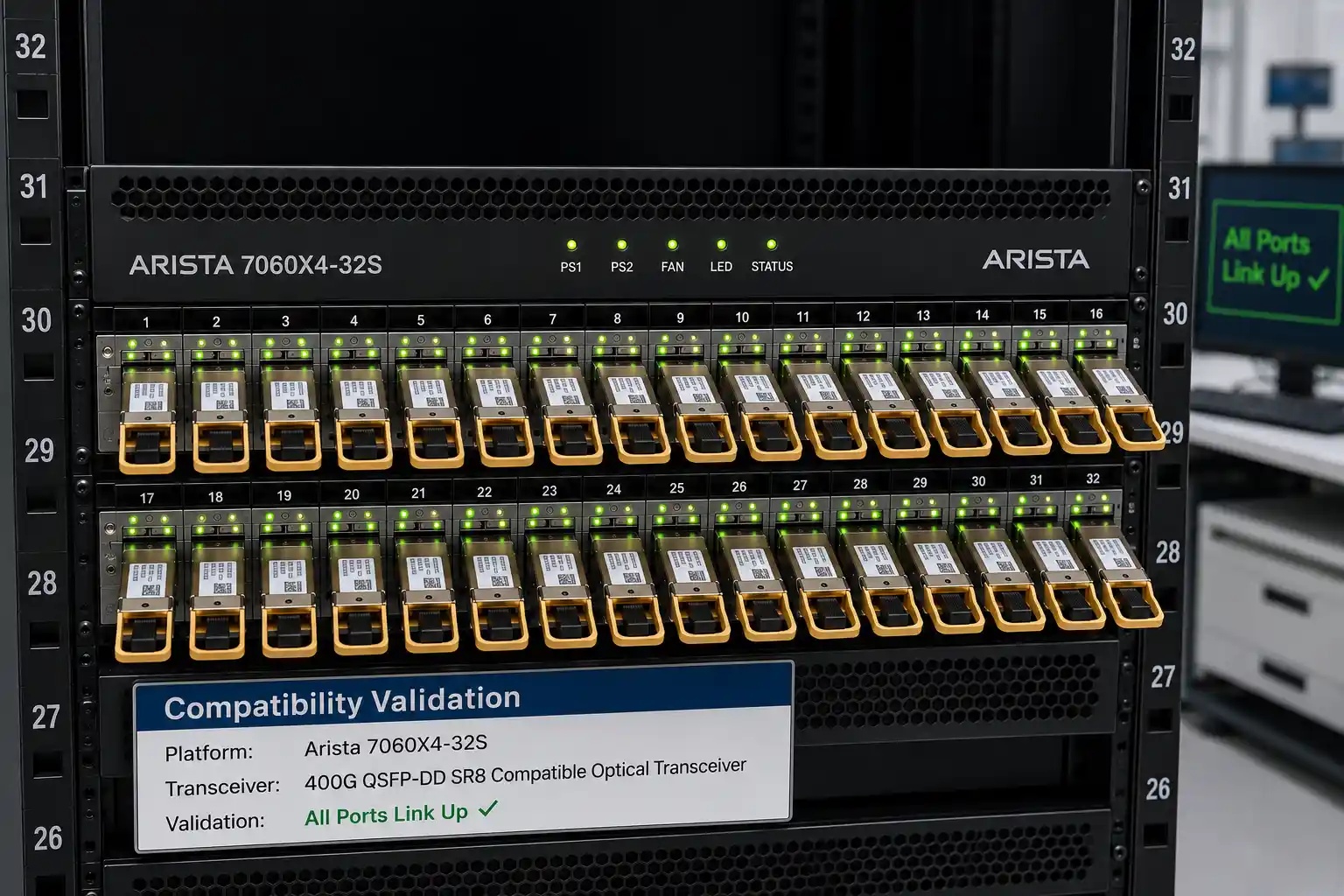 Compatible Test
 QC Test
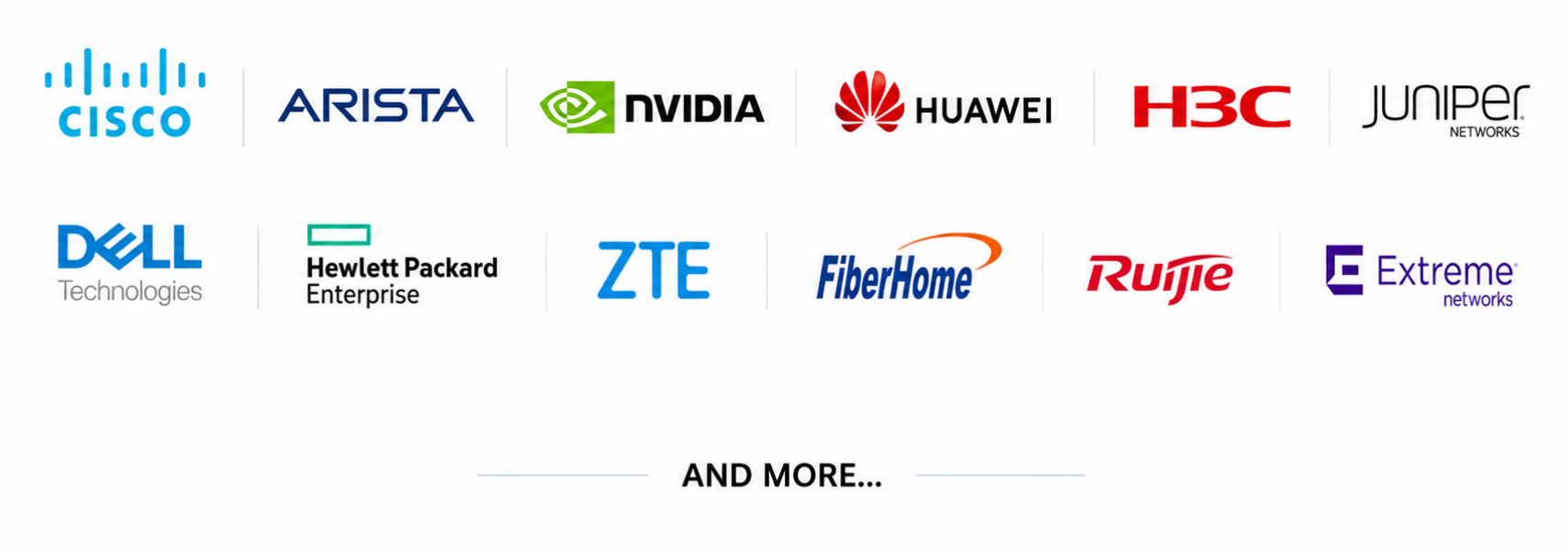
High Compatibility for all Brands
Q1: What is a 40GBASE-LR4 optical transceiver?
The 40GBASE-LR4 optical transceiver is a QSFP+ module designed for 40GbE transmission over single mode fiber. It supports distances up to 10km using duplex LC connectors and CWDM technology.
Q2: What fiber is required for a 40G QSFP+ LR4 module?
A 40G QSFP+ LR4 module requires OS2 single mode fiber with duplex LC connectors. Multimode fiber is not supported for standard LR4 transmission.
Q3: What is the maximum transmission distance of a 40GBASE-LR4 module?
The 40GBASE-LR4 module supports transmission distances of up to 10km over single mode fiber, making it suitable for campus, enterprise, and data center applications.
Q4: Where is a 40G LR4 optical transceiver commonly used?
A 40G LR4 optical transceiver is commonly deployed in data center interconnect (DCI), campus backbone networks, enterprise network infrastructure, and carrier Ethernet environments requiring reliable 40GbE connectivity.
Q5: What is the difference between 40GBASE-LR4 and 40GBASE-ER4?
40GBASE-LR4 supports transmission up to 10km over single mode fiber, while 40GBASE-ER4 extends transmission distances up to 40km. LR4 is typically used for data center and campus networks, while ER4 is more suitable for metro and long-distance network deployments.
 Cisco Compatible 40G QSFP+ SR4 Optical Transceiver ModuleThe Cisco Compatible 40G QSFP+ SR4 optical transceiver is designed for 40GbE multimode fiber connectivity in data center and enterprise networks.Supporting 40GBASE-SR4 transmission over OM3 and OM4 multimode fiber, this 40g qsfp sr4 module provides up to 100m reach through an MPO-12 interface. It offers reliable performance for spine-leaf architectures, switch interconnects, and high-density data center deployments. Product Highlights *Integrated Macom chip, max power consumption 1.5W *Tested on target switches for top performance, quality and reliability *Hot-swappable: boosts uptime and eases servicing *Built-in DDM: Real-time parameter monitoring *Interoperable with other IEEE-compliant 40G interfaces (as applicable) *Compliant with SFF-8436 for broad compatibility *High-speed electrical interface meets IEEE 802.3 40GBASE-SR4QSFP-40G-SR4Send Inquiry
 Cisco Compatible 40G QSFP+ ER4 Optical Transceiver ModuleQSFP-40GB-ER4 is a high-performance optical transceiver designed for extended-reach single-mode fiber transmission, featuring high capacity, ultra-long distance connectivity, and high-density deployment. Utilizing Wavelength Division Multiplexing (WDM) technology, this module supports 40G data transmission over distances of up to 40 km on single-mode fiber. Fully compliant with the IEEE 802.3ba Ethernet standard, the QSFP-40GB-ER4 ensures seamless compatibility with existing network infrastructure, enabling smooth network upgrades without the need for architectural overhauls. Product Highlights *Up to 40km transmission over single mode fiber *Duplex LC interface with CWDM technology *Compliant with IEEE 802.3ba and QSFP+ MSA *Designed for telecom and metro networks *Ideal for enterprise backbone connectivity *Digital Diagnostic Monitoring (DDM) support *Hot-pluggable QSFP+ form factor *Compatible with Cisco, Huawei, H3C, Arista, and Juniper *Suitable for long-distance 40G network deploymentQSFP-40G-ER4Send Inquiry
Send Message